Mon–Sat: 9 AM – 5 PM

How to Specify Commercial Dinnerware: A Buyer's Technical Guide
For restaurant operators, F&B directors, and professional buyers, selecting dinnerware is not a matter of aesthetics alone. It is a technical specification process. The right dinnerware must withstand the thermal, mechanical, and chemical stresses of a commercial kitchen, day in and day out, without chipping, staining, or failing. The wrong choice leads to constant replacement costs, operational disruptions, and a compromised guest experience.
This guide outlines the key technical specifications that matter when selecting durable, high-performance ceramic dinnerware for professional foodservice use.
What Is Vitrified Dinnerware?
Vitrified dinnerware is ceramic that has been fired at a high enough temperature to become dense, non-porous, and glass-like. This process, called vitrification, is the single most important factor in a plate's durability. A fully vitrified ceramic body is the baseline requirement for any commercial application. Without vitrification, ceramic absorbs moisture, harbors bacteria, and chips easily.
| Material | Firing Temperature | Porosity | Durability |
|---|---|---|---|
| Earthenware | 1,800-2,100°F | High | Not for commercial use |
| Stoneware | 2,100-2,300°F | Low | Light commercial use |
| Porcelain | 2,300-2,400°F | Very Low | Commercial standard |
| HF Coors High-Alumina | 2,380°F | Near 0% | Exceeds commercial standard |
What to ask a supplier: "What is the firing temperature of your ceramic body, and what is its water absorption rate?" A true commercial-grade plate should have a water absorption rate of less than 0.5%. HF Coors dinnerware has a water absorption rate of near 0%, making it exceptionally resistant to staining and bacterial growth.
Glaze Hardness: The First Line of Defense
The glaze is the plate's protective surface. It must be hard enough to resist scratching from cutlery and durable enough to withstand repeated high-temperature commercial dishwashing cycles with harsh detergents. A soft or poorly bonded glaze will quickly show wear, compromising both appearance and hygiene.
A commercial glaze should have a Mohs hardness of at least 7, making it more scratch-resistant than stainless steel cutlery (which is typically 5.5-6.5). The glaze must also be rated for commercial dishwashers and certified 100% lead-free; most glaze colors, including white, are cadmium-free to meet FDA food safety standards.
HF Coors glazes are formulated for extreme durability and are fired at the same high temperature as the ceramic body, creating an integrated bond that will not separate or degrade over time.
Thermal Shock Resistance
Commercial kitchens are environments of extreme temperature changes. A plate may go from a hot pass under a heat lamp directly to a cold prep surface, or from a 500°F oven to a room-temperature table. The ability to withstand these rapid temperature changes without cracking is known as thermal shock resistance.
A true commercial plate should be oven safe when product-specific care instructions are followed and is designed for the demanding thermal cycles of a professional kitchen, including commercial dishwashers, microwaves, and broilers.
Shape and Design for Commercial Durability
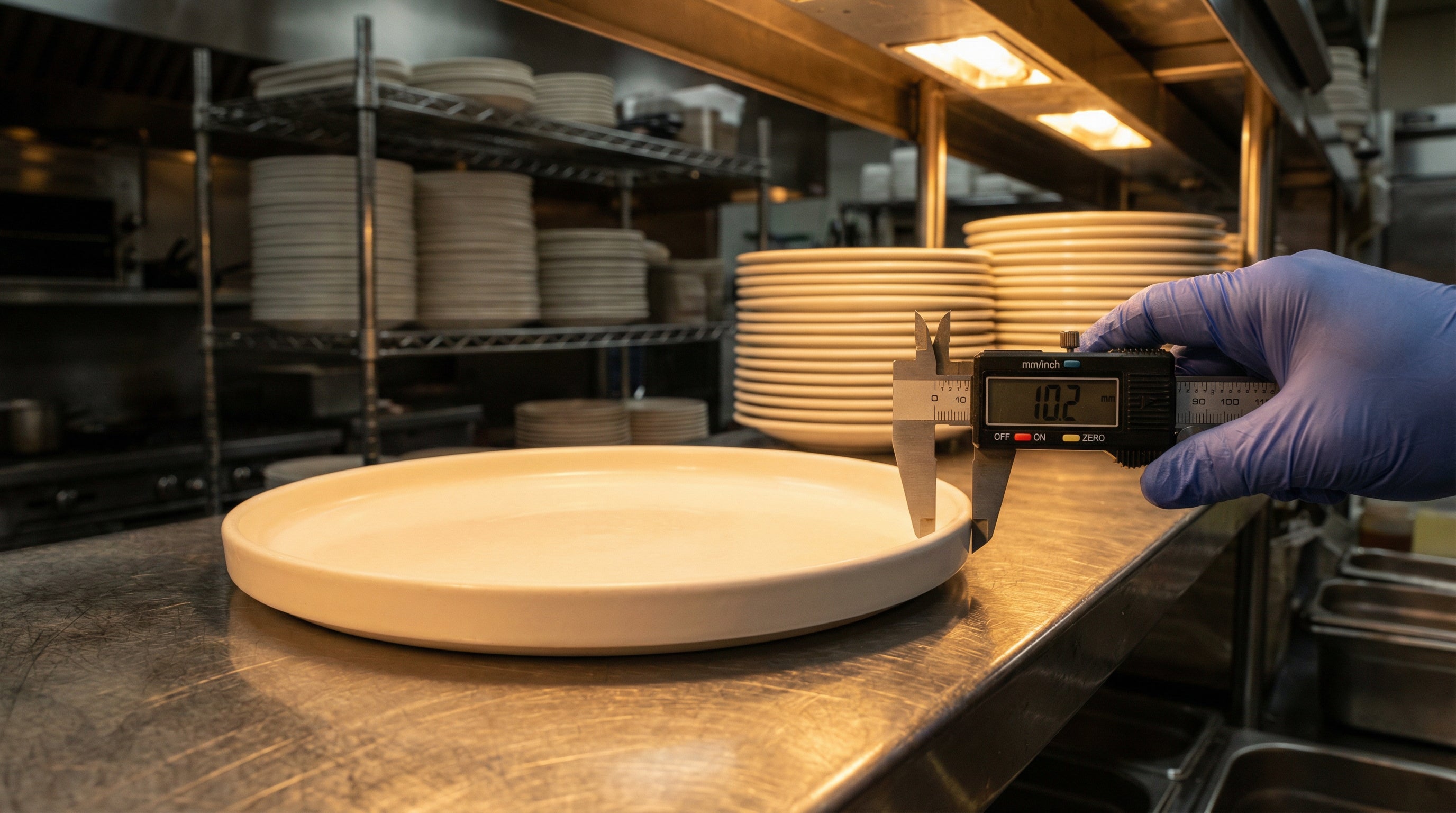
Beyond material science, the physical design of a plate impacts its durability and usability in a commercial setting. Rolled or reinforced rims provide significantly more chip resistance than thin, flat rims. A uniform foot and profile ensure stable stacking, preventing wobbling and reducing the risk of chipping in storage. The plate should feel substantial and balanced in the hand, conveying quality to the guest without being overly heavy for service staff.
Frequently Asked Questions
What makes commercial dinnerware different from residential dinnerware?
Commercial dinnerware is vitrified at higher temperatures (typically above 2,200°F), making it denser, more chip-resistant, and less porous than residential dinnerware. It is designed to withstand thousands of commercial dishwasher cycles, heavy stacking, and the thermal stress of professional kitchen service.
How long should commercial dinnerware last?
High-quality vitrified commercial dinnerware should last 3-5 years or more in a high-volume restaurant environment with proper handling. HF Coors dinnerware, fired at 2,380°F, routinely exceeds this benchmark due to its exceptional chip resistance and glaze durability.
Is all commercial dinnerware lead-free?
Not all commercial dinnerware is lead-free. Some imported products, particularly those with decorative glazes, may contain lead or cadmium. Always request a lead-free; current lead and glaze-specific cadmium documentation from your supplier. HF Coors dinnerware is 100% lead-free; most glaze colors, including white, are cadmium-free, exceeding FDA standards.
What is the difference between porcelain and vitrified ceramic?
Porcelain is a type of vitrified ceramic, but not all vitrified ceramics are porcelain. HF Coors uses a high-alumina ceramic body that is vitrified at 2,380°F, producing a material that is denser and more chip-resistant than standard porcelain while maintaining the same elegant appearance.
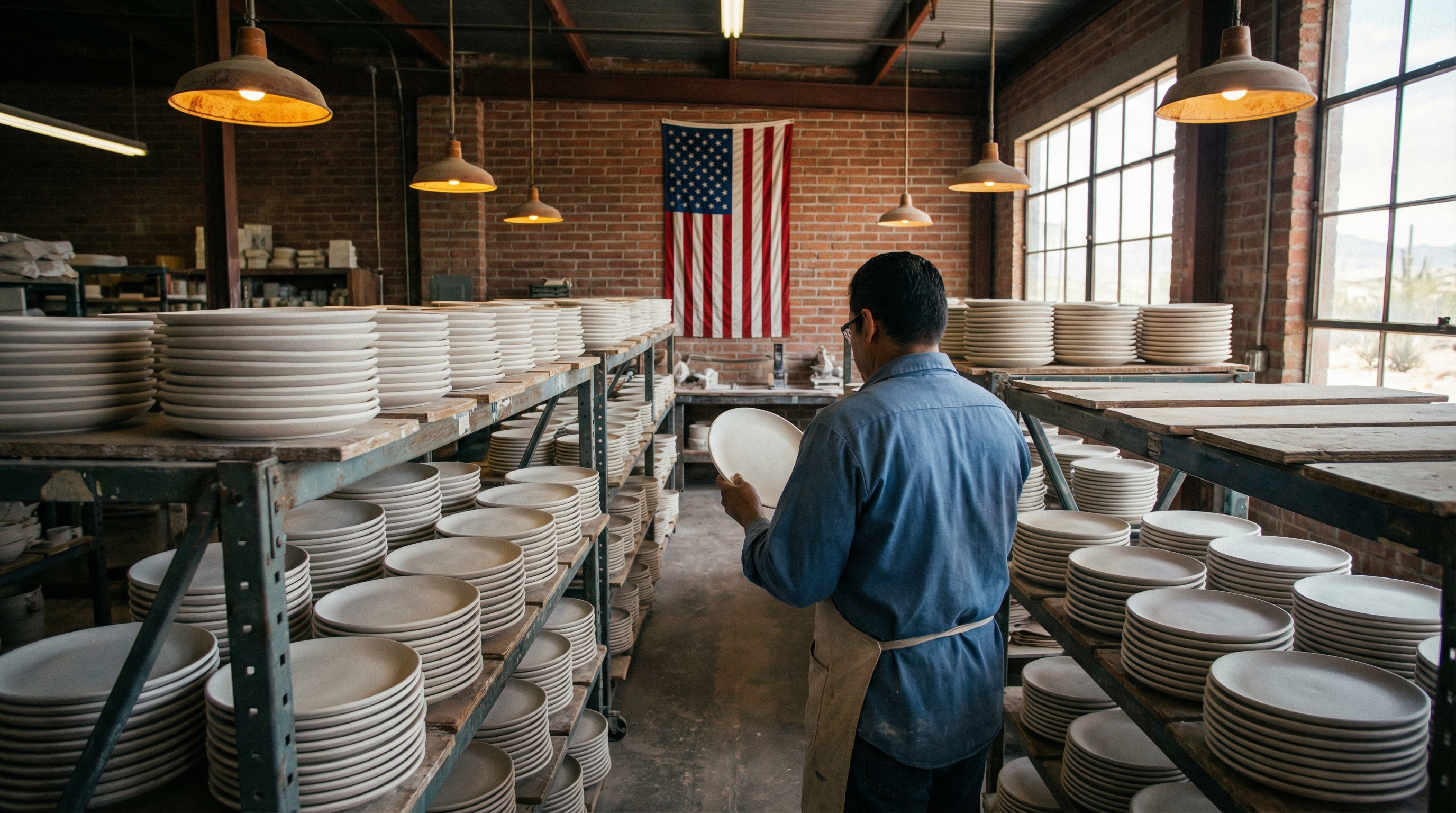
HF Coors manufactures all of its commercial dinnerware in Tucson, Arizona, using American-sourced materials. To learn more about specifying dinnerware for your operation, request a consultation with our commercial team.