
 Mon–Sat: 9 AM – 5 PM

Materials and Safety
We mix our own clays and glazes in Tucson from domestically sourced ingredients, so we know what goes into every piece. These are plain answers to the questions we hear most.
Is HF Coors dinnerware lead-free?
Yes. Every HF Coors ceramic piece is lead-free.
We do not put lead in our clay or in any of our glazes. Independent lab testing has detected no lead leaching from our dinnerware.
How is HF Coors dinnerware tested for heavy metals?
Every year, an independent laboratory tests our dinnerware for lead and cadmium.
The lab exposes each piece to a 4% acetic acid solution, the standard test for ceramic foodware, and measures whether any lead or cadmium leaches into it. Many of our commercial customers run their own tests as well.
In our most recent testing, in February 2026, no lead or cadmium was detected in any piece, including red-glazed and red-decorated pieces. The lab's detection thresholds are at least 20 times lower than FDA limits, and our ware meets California Proposition 65 limits.
Every piece is made from the same clay formula and from glazes we mix ourselves, so we test a sample of shapes and colors each year.
Is HF Coors dinnerware cadmium-free?
Most of it is. Our clay and most of our glazes, including white, contain no cadmium.
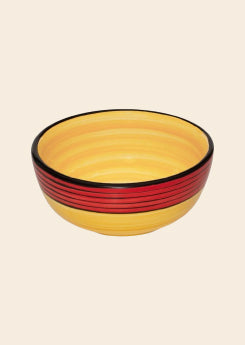
Our red and orange glazes, and shades thereof, use encapsulated cadmium: the pigment is sealed inside zircon crystals. No other HF Coors glazes use cadmium.
In independent lab testing, no cadmium was detected leaching from our dinnerware, including red-glazed and red-decorated pieces. The lab's detection threshold for cadmium is at least 25 times lower than the FDA limit. We have also tested red and orange pieces after five years of daily use by our CEO's family, with the same result.
Does HF Coors dinnerware contain PFAS, PFOA or PTFE?
We do not use these non-stick chemicals, and our pieces are not coated with them.
They have no part in how ceramic dinnerware is made. Because they are not in our process, we do not test for them.
Does HF Coors dinnerware contain aluminum?
It contains aluminum oxide, not metallic aluminum.
Aluminum oxide (alumina) is a natural component of ceramic clay and glaze and helps make our dinnerware durable. Aluminum is not regulated in ceramic dinnerware by FDA and is not on California's Proposition 65 list, so we do not test for it.
Does HF Coors dinnerware contain copper?
There is no copper in our raw materials or glazes.
FDA has no testing requirement for copper in ceramic dinnerware, so we do not currently test for it.
Are polymers or glues used to make HF Coors dinnerware?
We do not use polymers or glues in our clays or glazes.
Each piece is clay and glaze, fired at 2,000 to 2,300 degrees Fahrenheit.
Is HF Coors dinnerware stoneware?
By definition, yes. Our clay is vitrified, highly chip-resistant, fired at 2,000 to 2,300 degrees Fahrenheit, and glazed.
Earthenware, by contrast, is typically fired at a lower temperature. Traditional stoneware usually means a single, darker clay. Ours is a lighter body that we formulate from several domestically sourced ingredients and mix on site.
Still have a question?
Ask us. Call 520-903-1010 or toll-free 800-782-6677, or email info@hfcoors.com, and you will reach the people who make your dinnerware.

